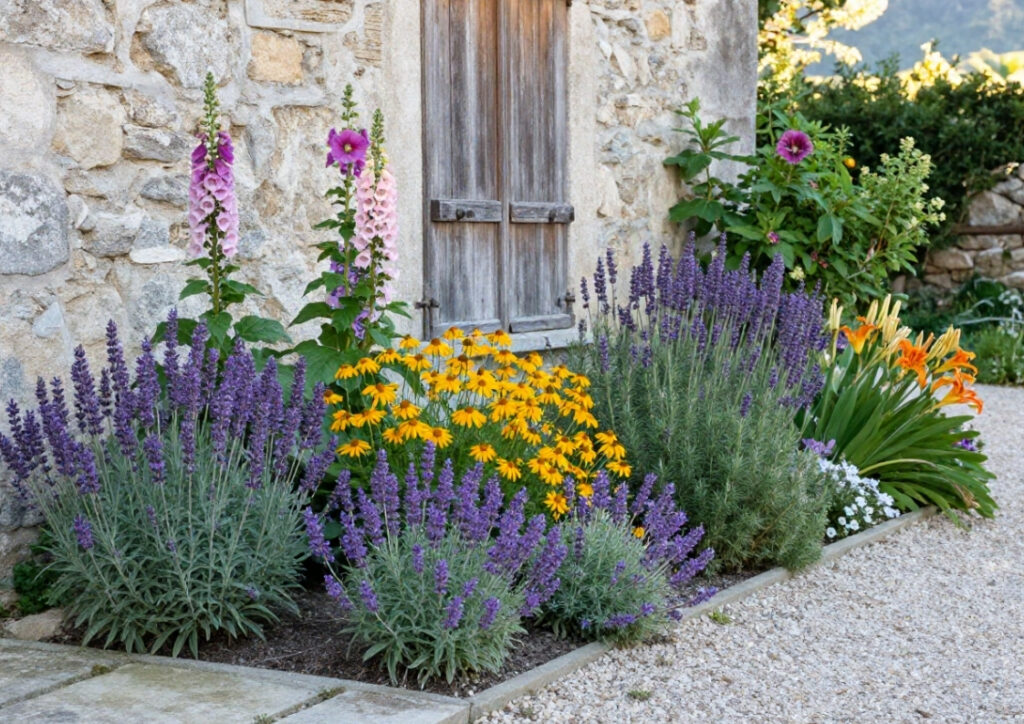
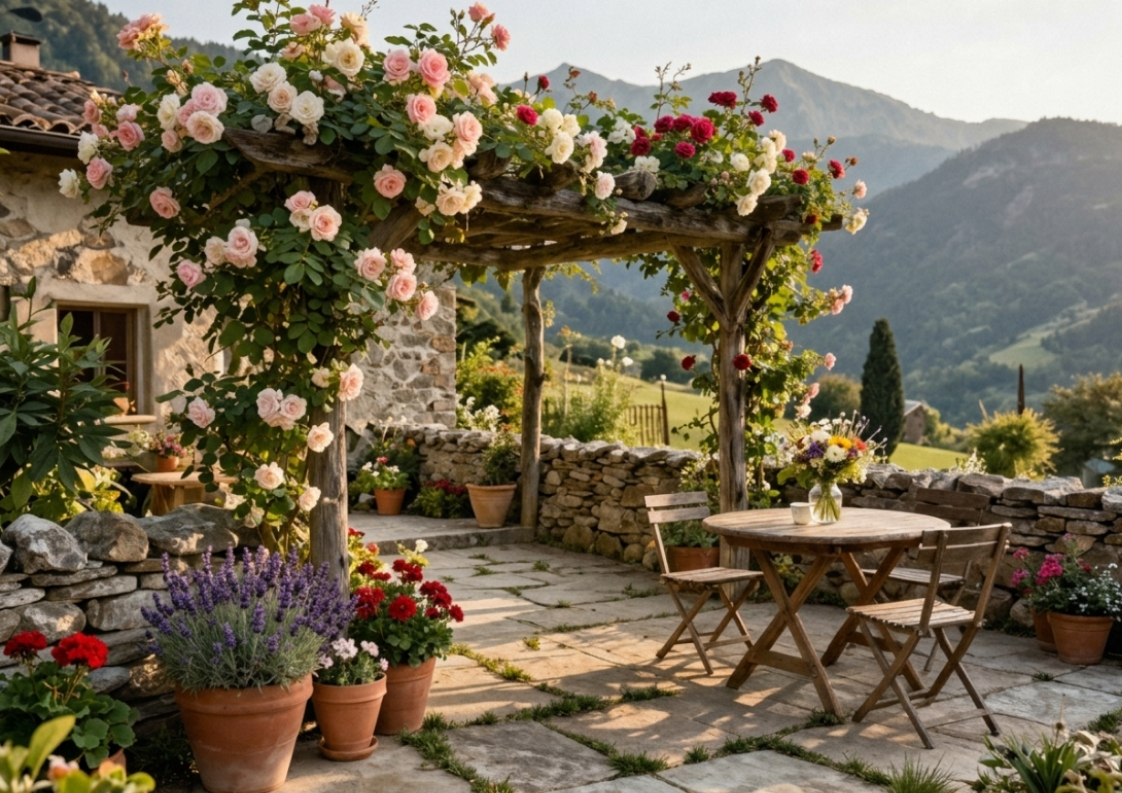
A beautiful garden does not necessarily have to mean hours of maintenance every week.
Whether you own a second home, travel regularly, or simply want to spend more time enjoying your outdoor space, a few thoughtful choices can significantly reduce the time spent on garden upkeep.
Here are some ideas we find particularly relevant for gardens in the Hautes-Pyrénées.
Choose plants suited to your region
This is probably the most important advice.
Plants adapted to the local climate will generally be more resilient, require less watering, and need less care over time.
Among the easy-going perennials commonly found in local gardens:
- hardy geraniums;
- daylilies;
- nepeta;
- achillea;
- perennial salvias.
Reduce water requirements
Watering quickly becomes a constraint when you are not always on site.
Mulching is one of the simplest and most effective solutions. It helps retain soil moisture, reduces weed growth, and protects plants during hot weather.
Combining drought-tolerant plants with effective mulching can significantly reduce the need for watering.
Simplify the layout
Highly segmented flowerbeds, numerous borders, and small corners often make mowing and maintenance more complicated.
By contrast, more open and structured spaces are quicker to maintain while still creating an attractive garden.
Focus on perennial plants
Unlike seasonal planting that needs to be replaced regularly, perennials return year after year.
They are often an excellent foundation for creating an attractive garden without having to start from scratch every spring.
Choose low-maintenance trees
A tree brings shade, freshness and character to a garden.
Some species often appreciated for their resilience and low maintenance include:
- lime tree;
- sterile plane mulberry;
- field maple;
- serviceberry;
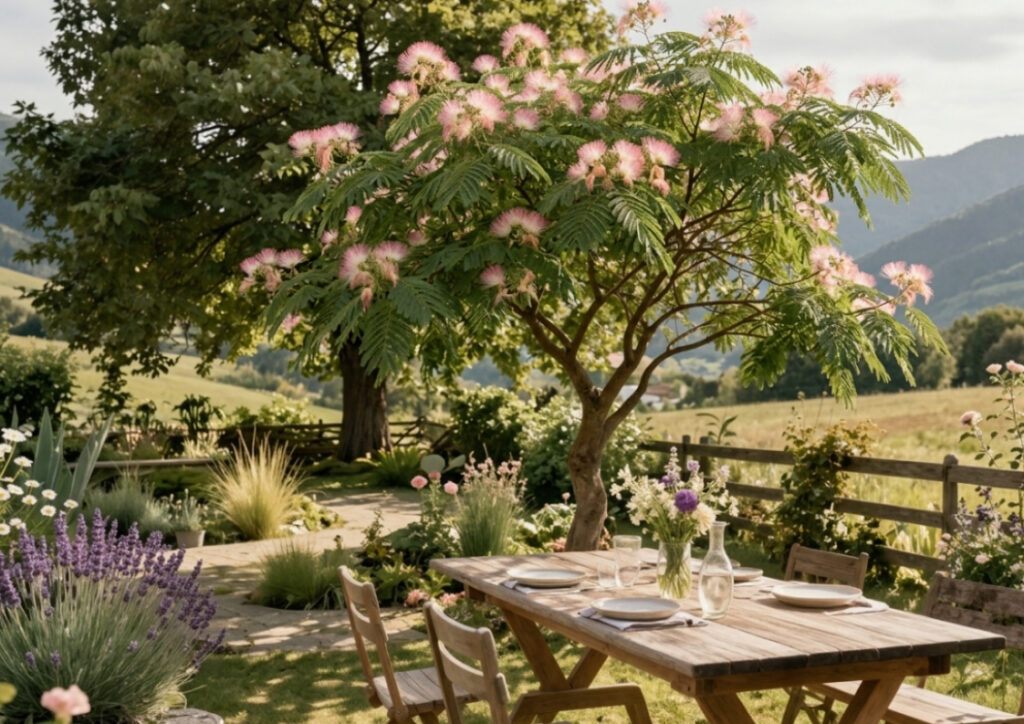
- albizia.
Accept that a garden is a living space
A garden does not need to be perfectly trimmed or strictly controlled to be beautiful.
Allowing some more natural areas often supports biodiversity while reducing maintenance time.
The goal is not a perfect garden, but one that is enjoyable and suited to your lifestyle.
In summary
The most enjoyable garden is not necessarily the one that requires the most work.
By choosing suitable plants, reducing water needs and favouring simple layouts, it is entirely possible to enjoy an inviting outdoor space without spending every weekend maintaining it.
As is often the case, a successful garden is above all one designed for those who live in it.